Is Plug-in Solar Legal in the UK? The 2026 Rules Explained
By Matt · Updated 26 November 2026
Quick answer
Yes. Since 27 August 2026, plug-in solar is legal in England, Scotland and Wales. The kit's inverter must put out no more than 800W, it must plug into a fixed socket (not an extension lead), it must be on the ENA G98 Type Test Register, and you must tell your network operator within 28 days. Renters need their landlord's permission. Northern Ireland isn't covered yet.
- Time
- 10 minutes to check and register
- Difficulty
- Easy
- When
- Winter, Spring, Summer, Autumn
Plug-in solar, sometimes called balcony solar, became legal in Great Britain on 27 August 2026. The change came through a statutory instrument (SI 2026/848) that amended the plug and socket safety regulations and the electricity supply regulations, so that compliant plug-in kits no longer need a fixed installation by an electrician.
Here’s what that means in practice.
The 800W limit
The kit’s microinverter can put out no more than 800W (800VA). That’s the limit on what goes into your socket, not on the panels. You can connect more panel wattage, up to about 2,000W, and the inverter simply caps the output on bright days. Plenty of kits use 850W to 950W of panels for that reason, because it keeps output up on dull days.
Only approved kits
The kit must meet the government’s interim product specification for plug-in solar devices and be listed on the ENA G98 Type Test Register. Look up the exact model before you buy, especially from online marketplaces. A kit that isn’t listed isn’t legal to connect, even if it looks identical to one that is.
A fixed socket, never an extension lead
The kit plugs into a normal fixed wall socket using a standard UK plug. Don’t use an extension lead, a multi-way adaptor or a reel. If the socket is outside, it should be a proper weatherproof outdoor socket.
It’s worth checking your electrics too. Which? advises making sure your consumer unit has modern residual current (RCD) protection, and homes rewired in roughly the last 15 years are likely to be fine. If your wiring is older, an electrical safety check (EICR) costs roughly £100 to £250.
Tell your network operator within 28 days
You need to notify your local distribution network operator (DNO) within 28 days of plugging the kit in. It’s a notification, not an application, so you don’t need to wait for approval. Some retailers and registration services handle it for you. If you’re not sure who your DNO is, it’s the company that runs the cables in your area, not your energy supplier.
Where you can put it
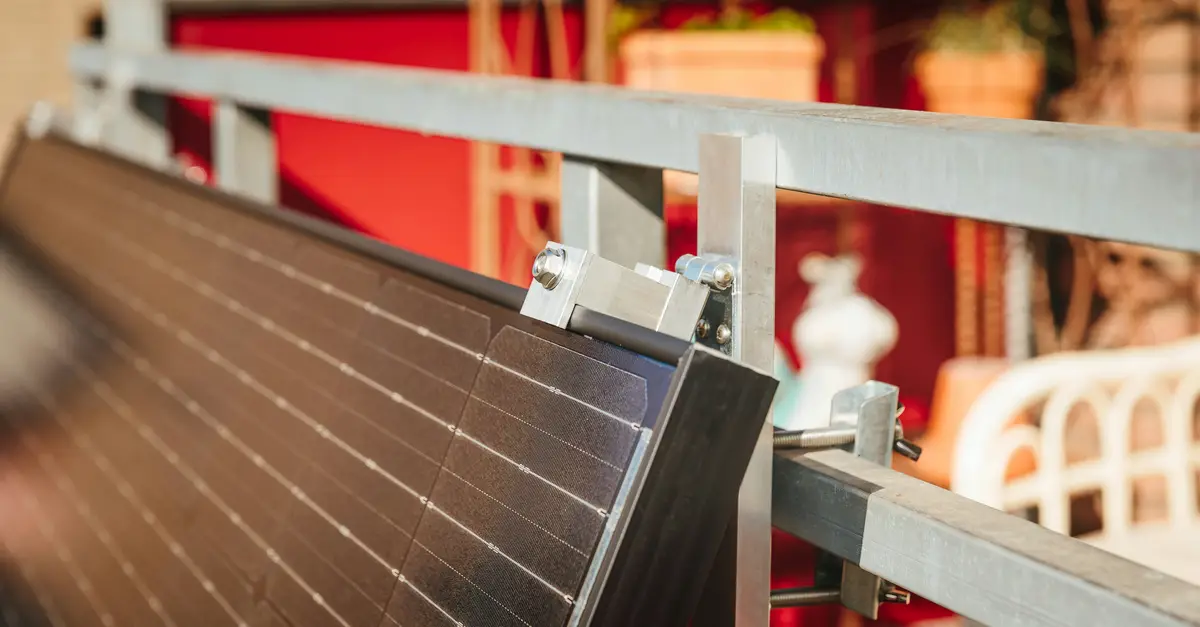
- Panels shouldn’t go on wooden balconies, fences or gates, and there are limits on how far they can stand above a roof or out from a wall.
- Most installs count as permitted development, but listed buildings and conservation areas may need planning permission.
- Check what the mount is designed for. Several popular kits say clearly that they’re for the ground or a solid wall and not for balconies.
- Panels can weigh up to about 20kg each, so the fixing needs to be solid.
Renting or leasehold
You need your landlord’s or freeholder’s permission first. Under the Renters’ Rights Act 2025, tenants can formally ask and landlords can’t unreasonably refuse, and the government has said it’s working on guidance for tenants.
Batteries aren’t covered
The new rules cover plug-in solar panels only. A battery that feeds power back into your home through a socket still needs installing by an electrician. Our plug-in battery guide explains where that stands and what you can do instead.
Export payments
DIY plug-in kits can’t currently earn Smart Export Guarantee payments, which normally need an accredited installer. Any power you don’t use goes back to the grid unpaid, so the aim is to use as much as possible yourself.
Other things to do
- Tell your home insurer. It’s a simple update, and it avoids any argument later.
- Northern Ireland: the new rules don’t apply there yet.
- Already have rooftop solar? Check with your installer or an electrician before adding a plug-in kit, to avoid overloading the circuit.
Your checklist
- Pick a kit that’s on the ENA G98 Type Test Register.
- Check your wiring and RCD protection, and get an EICR if your electrics are old.
- Get permission if you rent or are leasehold.
- Fit the mount securely in a sunny, unshaded spot.
- Plug it into a fixed socket.
- Notify your network operator within 28 days.
- Tell your home insurer.
Ready to choose? See our pick of the best plug-in solar kits, or work out what one could save with our savings calculator.
Sources
Disclosure: Some links on this site may be affiliate links. If you buy through them, we may earn a commission at no extra cost to you. Our guides are written to help you choose suitable products, not just promote the highest-paying options.